
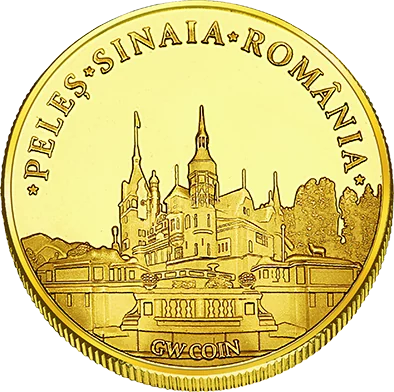



Address:
PELEȘ and PELIȘOR NATIONAL MUSEUM
www.peles.ro
Aleea Peleșului nr. 2, Sinaia, 16100, Prahova County, Romania
Visiting programme Peles:
Monday: closed:
Tuesdays: 09:15 – 17:00 – On Tuesdays only the basic exhibition (ground floor) can be visited.
Wednesday: 10:00 – 17:00
Thursday – Sunday: 9:15 – 17:00
Opening hours Pelișor:
Monday and Tuesday: closed
Wednesday: 10:00 – 17:00
Thursday – Sunday: 9:15 – 17:00
PELEȘ and PELIȘOR National Museum

PELEȘ AND PELIȢOR NATIONAL MUSEUMS
Urban context:
The Peles Castle was built on the initiative of the first king of Romania, Carol I, outside the borders of the commune of Podul Neagului, a settlement of 24 square kilometres in 1874 – the year in which, at the sovereign’s urging, the commune was renamed Sinaia. A year later, the first manor houses were built in the centre of the village, and in 1876 construction began on the Ploiești-Predeal railway, which also passed through Sinaia. At the same time, between 1873 and 1875, the foundations of Peles Castle were laid. The foundation stone laying ceremony of the royal residence took place in a festive setting on 10/22 August 1875.
Period: 1873-1914, on 1,000 hectares of land known as Piatra Arsă or the Sinaia estate, purchased by King Carol I from Eforia Spitalelor in 1871.
Authors:
Architects: dr Wilhelm von Doderer (1872-1876), professor at the Technische Hochschule in Vienna; Johannes Schultz (1873, site manager, Doderer’s assistant and chief architect between 1876 and 1883); Émile André Lecomte du Noüy (1890-1892); Karel Liman (1896-1924); Jean Ernest, contractors, builders and owners of building material warehouses.
Legal status:
Former royal residence (1883-1947), nationalised in 1948, museum from 1953 to 1975 and again from 1990 to the present. Since 2007 it has been the property of His Majesty King Michael I of Romania, while remaining a public institution administered by the Romanian State through the Ministry of Culture and National Heritage.
Historical context of the building:
Peles Castle was built on the initiative of King Carol I to serve as a summer residence with political, cultural and symbolic functions. After 1914, it continued its role as a representative space and museum, although it was no longer inhabited for six months of the year, as the founding sovereign had done. Until 1947, it hosted official visits and military ceremonies. The most important event to take place at Peles Castle before King Michael’s abdication in December 1947 was the celebration of its semi-centennial in 1933, under the reign of King Charles II (1930-1940).
Between January and March 1948, the castle was closed by the communist authorities and its heritage assets were inventoried. Most of the collections – paintings, furniture, textiles, decorative art and books – were transferred to the Bucharest Art Museum. Others were later entrusted to cultural institutions in Romania’s major cities.
In 1953, the castle became a National Museum open to the public. Meanwhile, other buildings on the Peles estate – such as Pelișor Castle (the private residence of the second royal couple, Ferdinand and Maria) and Foișor (the former hunting lodge of the first Romanian king and later the residence of Kings Carol II and Michael I) – were refurbished as creative havens for writers, musicologists and artists favoured by the communist regime.
In 1975, deteriorating conditions led to the closure of the castle and the relocation of artefacts to an old mansion of the Bibescu family in Posada (20 km south of Sinaia). Between 1966 and 1982, a former royal outbuilding was transformed into the Museum of Decorative Arts (Ceramics), which displays pieces from the royal collections.
After the fall of communism in 1989, Peles and Pelisor castles were reopened to visitors (1990 and 1993 respectively). In 2007, following negotiations between the Romanian state and the royal family, the property was returned to King Michael I, although the administration remained in the hands of the state.
The Foișor, inaugurated in 1881, was devastated by fire in 1932 and rebuilt under King Carol II. In the 1970s, a new wing was added and the interiors were significantly altered. After 1989, it became a protocol villa for the Romanian presidency.
Design, construction and suppliers:
The initial plans were drawn up by Wilhelm von Doderer (Vienna), inspired by the French Renaissance castles of the Loire Valley and Viennese Ringstrasse architecture. Rejected by Charles I in 1876, the project was entrusted to Johannes Schultz, who designed the first phase of the castle (1879-1883) in the Swiss chalet style with German Fachwerk exterior decoration.
Later contributions came from:
Émile Lecomte du Noüy (1890-1892): the Moorish Hall.
Karel Liman (1894-1924): Queen Elizabeth’s Chapel, princely apartments, marble gallery, concert hall and others.
Electricity was installed in 1884 (with a private generator) and a power station was built in 1897.
Main additions (1903-1914):
Centre tower (1906) with a three-dial clock by Bavarian royal watchmaker Johann Mannhardt.
Florentine Hall, Hall of Columns and imperial apartments.
The Halls of Armour and the Hall of Honour (German Renaissance style, inspired by the Chamber of Commerce in Lübeck).
Art suppliers:
Notable suppliers include Heymann (Hamburg), August Bembé (Cologne-Mainz), Joseph Dollitschek (Vienna), Anton Pössenbacher (Munich) and Zettler Studios (Munich, stained-glass windows).
The death of King Charles I in 1914 marked the end of the architectural project.

